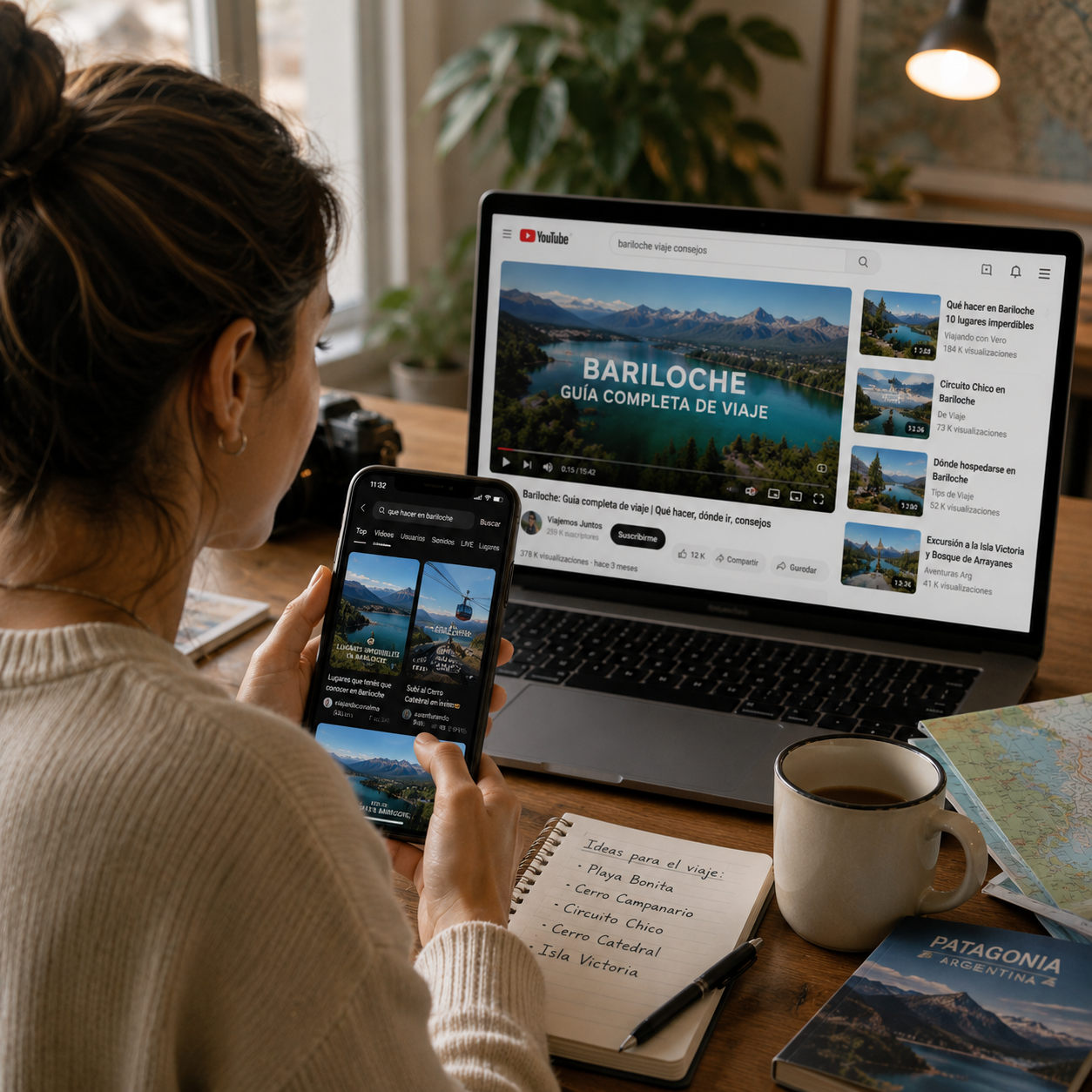
For many years, digital tourism strategies were built around a single concept: showing up when users began searching for a destination. If someone searched for a hotel, a flight, or a vacation package, it meant there was already clear purchase intent, and the goal was to capture that demand before competitors did. While this approach remains important, it is no longer enough. Before performing a search, people discover destinations, consume content from other travelers, save recommendations, and develop the desire to travel. That is why the most effective strategies today are no longer focused solely on capturing intent—they are also designed to create it from the earliest stages of the customer journey.
The Journey Begins Long Before the Booking
Travel is one of the most emotional purchasing decisions consumers make. Unlike many other products, a booking rarely happens after a single advertising exposure. Travelers spend days—or even weeks—researching destinations, comparing options, reading reviews, watching videos, and seeking inspiration before making a decision.
This shift requires a different approach to tourism marketing. The decision-making process does not begin when someone searches for a hotel—it begins when the desire to travel first emerges.
Throughout this journey, travelers experience multiple touchpoints. Each serves a different purpose and requires a different message. Some platforms inspire, others help users research, while others ultimately capture the conversion. Building a strategy focused exclusively on performance marketing means entering the customer journey too late.
Social Media: The New Engine of Travel Inspiration
Social media platforms have become the primary place where many travel decisions begin. A video showcasing a beach, a city tour, or a restaurant recommendation can spark interest in a destination the user had never even considered.
Within this landscape, TikTok plays an increasingly important role. The platform has evolved beyond entertainment to become one of the leading discovery engines. Millions of users turn to TikTok to find destinations, hotels, restaurants, and travel experiences before they even open Google.
This evolution has also fueled the growth of TikTok Search, reflecting a new way people consume information. Searches are no longer limited to transactional queries such as "book a hotel" or "buy flights." Instead, they begin with exploratory questions like "things to do in Mendoza," "the best beaches in Brazil," or "places to visit in Patagonia."
For travel brands, this represents a tremendous opportunity. Success is no longer about appearing only when someone is ready to book—it is about being present when inspiration first happens. Brands that influence travelers at this early stage are far more likely to become part of the final purchase decision.
Traditional Search: Capturing Existing Intent
Once travelers begin comparing destinations, hotels, or activities, Search takes center stage. Search queries reveal clear intent and provide an effective way to capture existing demand. However, Search performs significantly better when it is supported by prior demand-generation efforts. For this reason, Search remains a critical marketing channel, but it reaches its full potential only when integrated into a broader media strategy.
Programmatic Advertising: Intelligent Reach and Frequency
In tourism, purchase decisions often unfold over several weeks, making consistent brand visibility essential. Programmatic advertising enables brands to accompany travelers throughout this journey across Display, Online Video, and Connected TV, increasing exposure frequency while reinforcing brand awareness.
Rather than driving immediate conversions, Programmatic advertising helps keep destinations and brands top of mind during a decision-making process where repetition and consistency are often decisive.
The Advantage of an Integrated Strategy
One of the most common mistakes in tourism marketing is treating each platform as an independent channel. The reality is exactly the opposite.
The most successful strategies build an integrated ecosystem in which every channel fulfills a specific role within the customer journey.
- TikTok generates inspiration and discovery.
- TikTok Search supports early-stage research.
- YouTube deepens consideration through longer-form content.
- Search captures intent once travelers are ready to compare options.
- Programmatic advertising maintains visibility and frequency throughout the entire decision-making process.
Each platform contributes a different piece to the same objective: guiding travelers from inspiration to booking.
Conclusion
Tourism marketing campaigns can no longer be built around conversion alone. Today, travel decisions begin long before a search and unfold across multiple platforms before resulting in a booking.
The brands achieving the strongest results are those that understand these new consumer behaviors and develop strategies capable of engaging travelers at every stage of their journey. In an ecosystem where discovery happens before search, the true competitive advantage lies not only in capturing demand but in creating the desire to travel from the very first interaction.



.png)