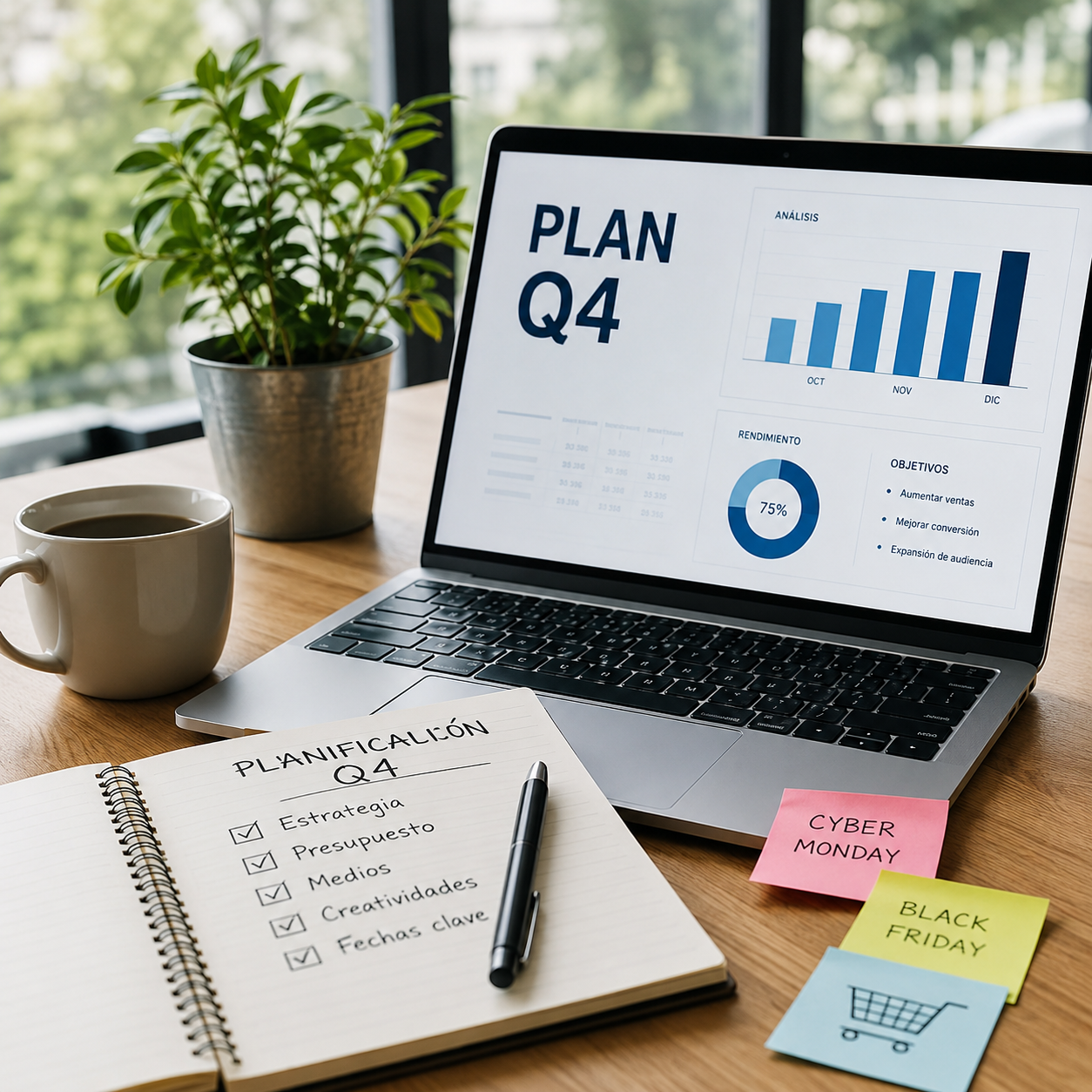
Every quarter represents a new opportunity to organize priorities, define business objectives, and plan for growth. However, quarterly planning often focuses on sales targets, product launches, promotions, or internal needs, leaving media strategy for a later stage.
This approach can limit the impact of campaigns. In an environment where attention is increasingly competitive and consumers interact with multiple platforms before making a decision, media should not be viewed merely as an execution tool, but as a central part of strategic planning.
Planning the quarter through a media lens makes it possible to anticipate opportunities, allocate investment more effectively, and build campaigns that are better aligned with business objectives.
Media Is Not the Final Step
One of the most common mistakes is thinking of advertising as something that is activated once the rest of the strategy has already been defined. First, the business decides what to sell, communicate, or promote, and only afterward considers where to advertise.
But media can add value much earlier in the process. It can help assess audience size, understand moments of demand, identify interests, anticipate competitive pressure, and determine which channels can best fulfill each role throughout the quarter.
Planning a quarter focused on awareness is not the same as planning one focused on conversion. Preparing for a product launch, a promotional campaign, an always-on strategy, or a seasonal activation also requires different media architectures.
Aligning Investment With Business Objectives
Strong quarterly planning should begin with a simple question: What does the business need to achieve during this period?
From there, media helps translate that objective into an actionable strategy. If the priority is generating demand, discovery platforms, video, social media, or programmatic advertising may play a more important role. If the objective is to capture intent, search and remarketing may become stronger priorities. If the goal is to drive conversions during a specific period, investment should focus on moments with a higher probability of response.
The key is not to distribute budget based on habit, but based on strategic purpose. Every channel should have a clear role within the quarter.
Anticipating Periods of Higher Competition
Planning ahead also makes it easier to prepare for periods of increased demand. Commercial events, seasonal changes, product launches, holidays, and special occasions often lead to greater advertising competition.
When brands activate too late, they may face higher costs, more saturated audiences, and less room for optimization. A well-planned strategy, on the other hand, makes it possible to build visibility before the peak, learn in advance, and reach key moments with more qualified audiences.
This is particularly important for campaigns where consumer decisions are not immediate. In many cases, the final conversion is the result of previous interactions that helped generate interest, consideration, or trust.
The Role of Measurement Throughout the Quarter
Planning media does not mean launching a campaign and letting it run without adjustments. It also means defining how progress will be measured throughout the quarter.
Each stage should have metrics aligned with its specific role. Awareness campaigns cannot be evaluated solely through immediate conversion metrics. Performance campaigns should not be analyzed without considering factors such as traffic quality, frequency, incremental cost, or the user's behavior after the interaction.
A well-structured measurement framework makes it possible to make decisions during the quarter rather than simply reviewing results after it ends. This helps redistribute investment, adjust messaging, strengthen channels, and optimize opportunities in real time.
A More Integrated Planning Approach
The greatest value emerges when media strategy is connected to the rest of the commercial planning process. Promotions, content, product launches, sales objectives, product availability, internal calendars, and communication initiatives should all work in coordination.
When each area plans independently, campaigns can lose consistency. But when media is integrated from the beginning, it becomes easier to build a strategy where every channel, message, and stage works toward the same objective.
Planning the quarter is not only about deciding how much to invest. It is about deciding where, when, how, and why to activate each media ecosystem.
Conclusion
Including media from the beginning of quarterly planning allows brands to move from a reactive approach to a more organized, efficient, and business-driven strategy.
In a market where consumers research more, compare more, and are exposed to more messages, the difference is not simply about being present. It is about reaching the right audience with the right message, through the right channel, at the right moment.
Because a successful quarter is not improvised: it is planned, measured, and optimized from day one.



.png)