
For years, digital campaigns for universities had one clear objective: generate leads. And while that’s still true, the way prospective students discover, research, and choose an institution has completely changed. Today, the challenge is no longer just about collecting completed forms, but about building a strategy capable of generating demand, capturing attention, and supporting an increasingly long and fragmented decision-making process.
In education, conversions rarely happen after a single interaction. A potential student might discover a degree program on TikTok, research it on Google, consume related content on YouTube, encounter the institution again through display advertising, and only weeks later submit their information. That’s why strategies focused exclusively on isolated performance campaigns are starting to lose efficiency compared to more integrated and omnichannel models.
One of the most common mistakes in the education vertical is becoming obsessed exclusively with CPL. Of course cost per lead matters, but universities cannot rely solely on generating volume. A cheap form submission does not necessarily translate into a future enrollment. When campaigns are optimized only to reduce costs, they often end up attracting users with low intent, poorly aligned profiles, or leads that never move forward in the admissions process.
The reality is that universities need to work across the full funnel. That means understanding that not all investment should go exclusively toward capturing immediate intent. Before filling out a form, users need to discover options, understand learning formats, compare programs, and emotionally connect with an educational proposal. That’s where platforms such as TikTok, Meta, YouTube, and Programmatic start playing a key role within the strategy.
In regional campaigns we developed for educational institutions, we saw short-form video content become one of the primary discovery points for younger audiences. TikTok, in particular, stopped being just an entertainment platform and evolved into an environment where people discover interests, search for information, and make decisions. In-App Lead Generation campaigns proved especially effective because they reduce friction and simplify the registration process on mobile devices — something fundamental for university audiences.
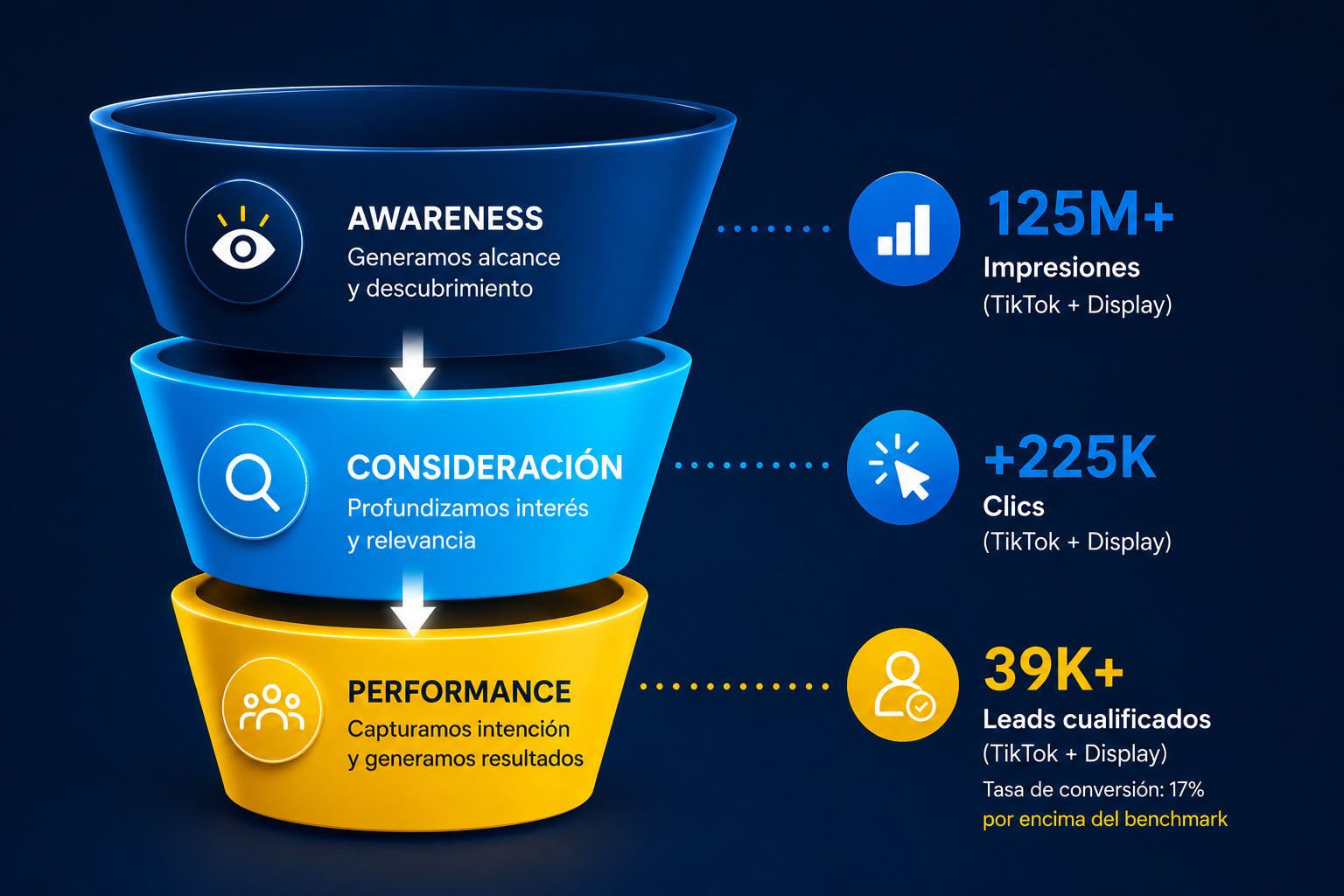
In one of the campaigns we managed, a strategy combining TikTok and Programmatic Display surpassed 125 million impressions and generated more than 39,000 qualified leads, achieving a 17% conversion rate, above the vertical benchmark. The real differentiator was not just scale, but the ability to combine awareness and performance within a single strategy.
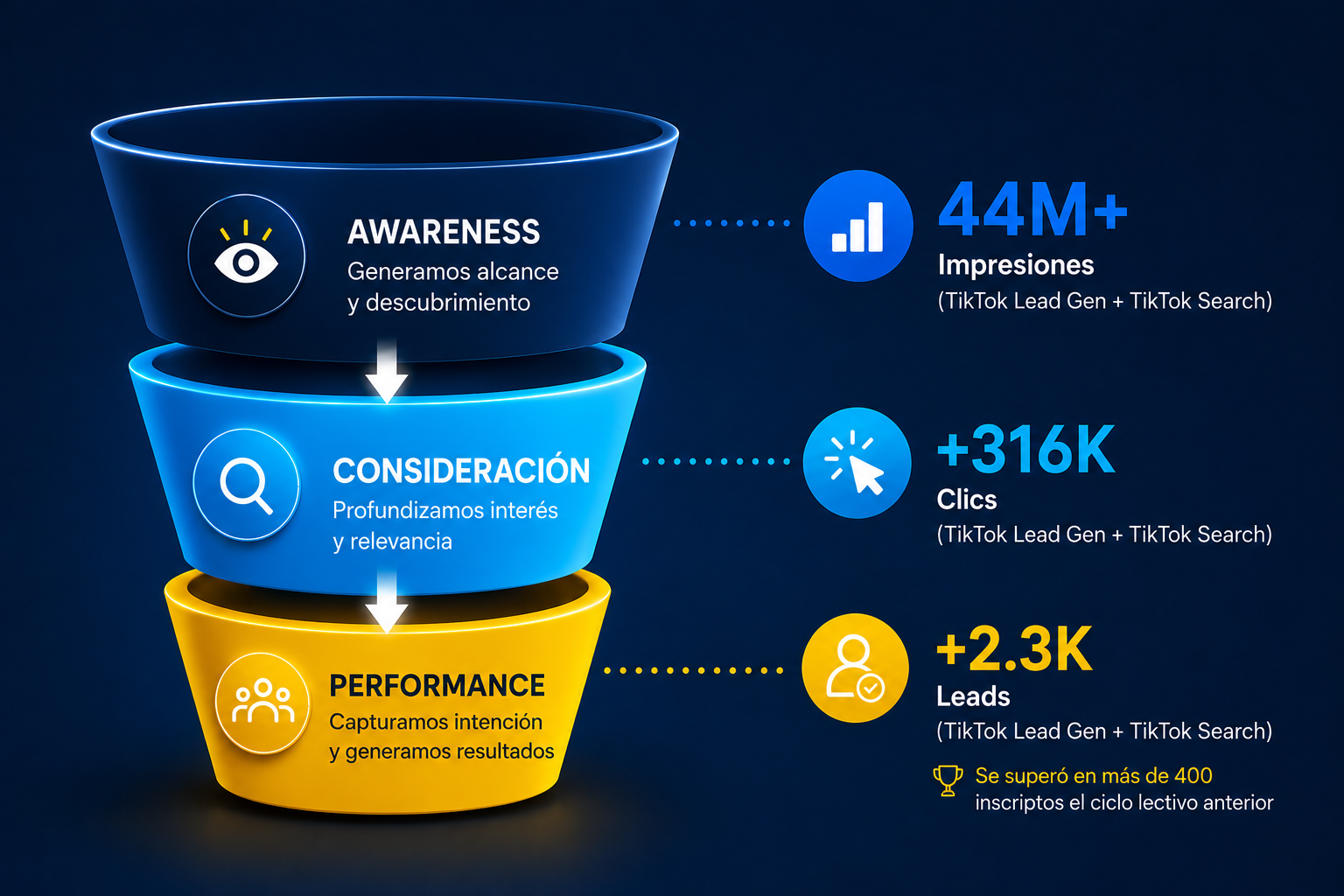
In another case, an always-on strategy integrating Programmatic Display, TikTok Lead Generation, and TikTok Search generated more than 44 million impressions and surpassed the previous academic cycle by over 400 additional enrollments. What stood out was that results did not come from a single channel, but from the connection between platforms supporting different moments within the user journey.
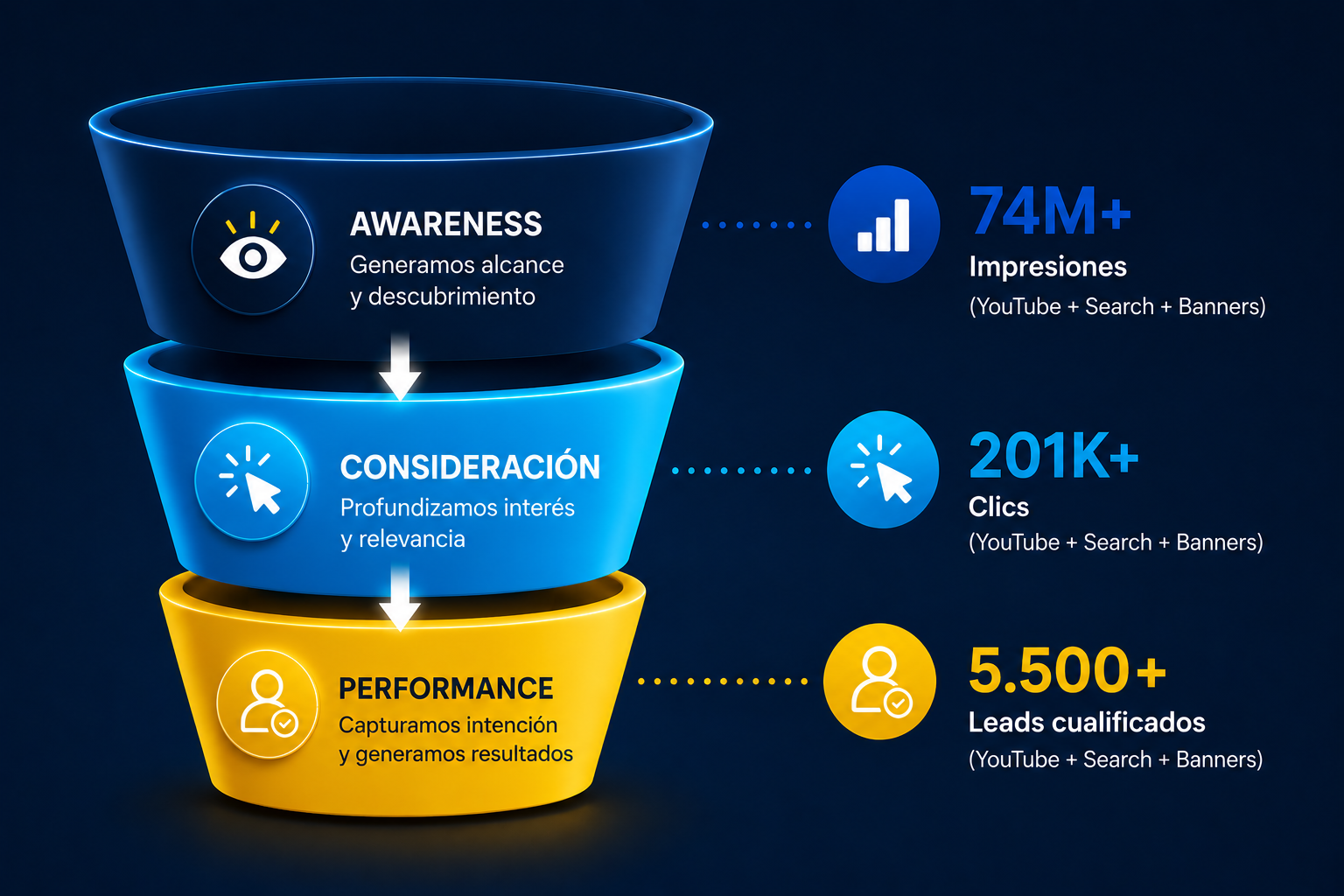
We also saw how YouTube video campaigns combined with Search and traffic-oriented banners helped strengthen both brand awareness and conversion. In a three-month strategy focused on undergraduate programs and online learning formats, the campaign generated more than 5,500 qualified leads and over 74 million impressions, proving that awareness and performance do not compete with each other — they reinforce one another.
Perhaps one of the most important lessons in digital education marketing is understanding that omnichannel does not simply mean “being everywhere.” It means building a coherent ecosystem where every platform has a clear role within the strategy: TikTok can drive discovery, YouTube can deepen consideration, Search can capture intent, and Programmatic can reinforce frequency and brand presence — all working together as a system rather than isolated tactics.
There is also another point that often goes unmentioned but is critical: investment directly impacts results. Educational campaigns need scale for algorithms to learn, for teams to test audiences and creatives, and to generate enough frequency to stay relevant. Expecting major results from minimal budgets usually limits learning opportunities and creates unrealistic expectations around campaign performance.
The universities achieving the strongest results today are those that understand that increasing enrollments is not only about generating forms, but about building sustained relevance over time. Because in education, the decision does not begin when someone fills out a lead form. It begins much earlier — the moment an institution captures attention, connects with a real need, and positions itself within an increasingly competitive digital ecosystem.



.png)